
The Independent National Electoral Commission (INEC) and the Nigerian Correctional Service (NCoS) have opened discussions on the possibility of extending voting rights to inmates across the country.
Click Here to Join Our Whatsapp Channel
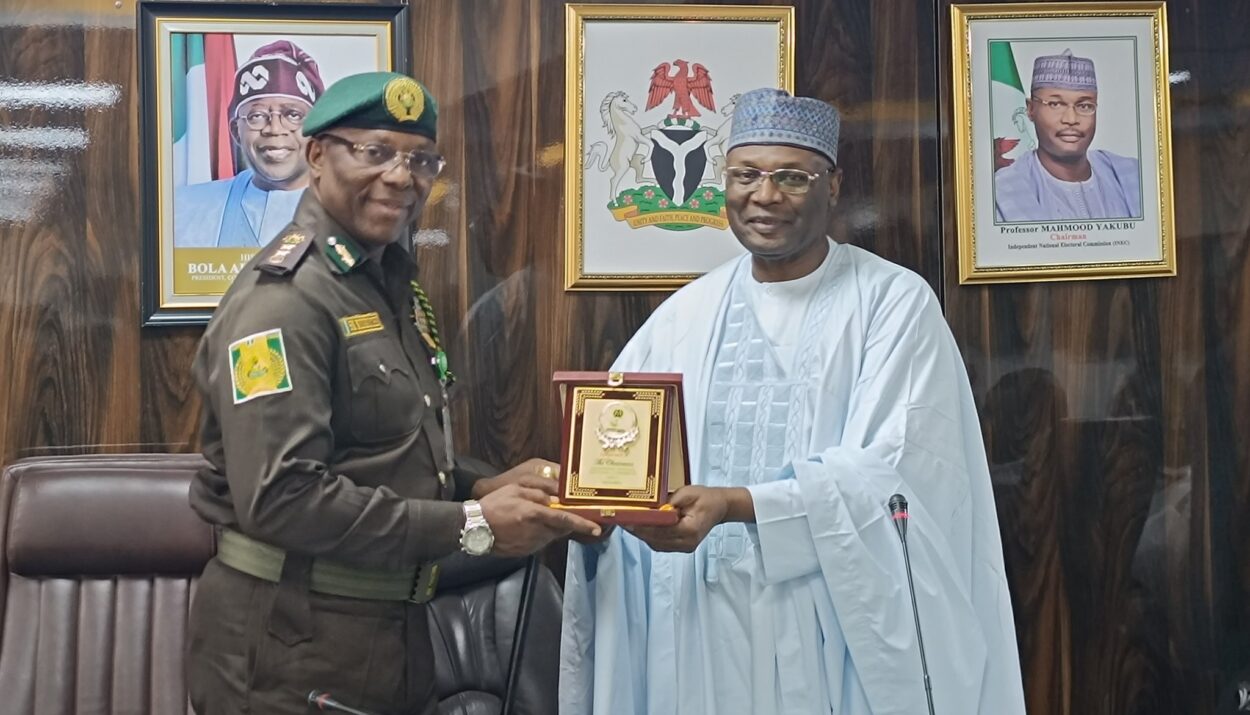
In a landmark meeting held at INEC headquarters in Abuja, the Controller General of the NCoS, Sylvester Ndidi Nwakuche Ofori, met with INEC Chairman, Professor Mahmood Yakubu, to advocate for electoral inclusion of the over 81,000 incarcerated Nigerians—more than 66 percent of whom are awaiting trial.
Ofori, in his first official visit to INEC since assuming office, said inmates should not be stripped of their rights, especially those yet to be convicted. “Anybody can find themselves on the other side of the law,” he said. “They have rights, and one of those rights is the right to vote. The fact that they are incarcerated should not strip them of their citizenship.”
He cited previous court rulings, including a notable judgment in Benin, and resolutions by the National Assembly affirming the voting rights of certain categories of inmates. Ofori urged INEC to consider safe and transparent mechanisms to facilitate inmate participation in future elections.
Professor Yakubu, in response, welcomed the proposal, noting that several African countries such as Ghana, Kenya, and South Africa have already granted voting rights to prisoners. He confirmed that Nigerian courts, through rulings in 2014 and 2018, had recognised the rights of inmates—particularly those awaiting trial—to vote.
Yakubu revealed that a joint technical committee had earlier been set up by INEC and NCoS to examine the legal and logistical framework required. This includes facility mapping, inmate categorisation, and planning for voter registration, polling unit access, and participation of political parties and observers.
“Our immediate task is to engage with the National Assembly for clarity and the necessary legal backing,” Yakubu said. “Working together, we can take advantage of ongoing electoral reforms to ensure no eligible citizen is disenfranchised.”
While both agencies acknowledged the challenges of conducting elections within correctional facilities—including campaign access, security, and eligibility—there was optimism that these could be resolved through multi-stakeholder collaboration involving lawmakers, civil society, and election observers.
Advocacy groups like the Carmelite Prisoners’ Interest Organization (CAPIO) have consistently pushed for inmate voting rights as part of a broader democratic inclusion agenda.
Though no specific timeline was given, the meeting marked a significant step toward potential electoral reforms that could see Nigeria join a growing list of nations that allow inmates to vote.
“Inmates are part of our society,” Ofori reiterated. “If we deny them the right to participate in democracy, we deny ourselves the opportunity to make our democracy truly representative.”